22nd Sunday of Ordinary Time
Reflection: Working for justice in the world
By SISTER CAROL DEMPSEY
Throughout recorded history, the natural world is the place of encounter with the Divine and has shaped spiritual narratives of diverse cultures worldwide.
Ancient accounts of the prophetic are located among the Mari people who practiced shamanism. Native Americans speak of vision quests. Taoist sages tell stories of nature-centered revelations of the Divine. Aboriginal dreamtime stories recount sacred connections that occurred in the Australian outback. Sanskrit texts of ancient India describe rishis who found divine wisdom beneath sacred trees. Norse sagas detail profound encounters in primordial forests. Japanese Zen masters write about sudden enlightenment while contemplating cherry blossoms. Sufi mystics describe divine unity experienced in desert solitude.
The writings of Christian mystics such as Julian of Norwich, Meister Eckhart, Catherine of Siena, and even the musical compositions of Hildegard of Bingen all attest to the presence of the Divine encountered in the natural world.
All this is to say that the deepest experience of the prophetic is the encounter with the Divine, oftentimes through the natural world.
The prophetic is also a call and a vocation most often concerned with addressing issues of injustice and working for systemic, structural and attitudinal change in the face of oppression.
The book of Jeremiah provides us with a glimpse into the experience of what it means to embrace the prophetic vocation and mission as it relates to issues of justice. The character Jeremiah is compelled to address social, political and religious leadership, judicial officials, power brokers and those involved with a community’s economy. The vocation is all-consuming and divinely driven. Such is the spirit that undergirds the work for justice.
This work can cost no less than everything, including the loss of one’s life. We have only to remember the four churchwomen — Maryknoll Sister Maura Clarke, lay missionary Jean Donovan, Maryknoll Sister Ita Ford and Ursuline Sister Dorothy Kazel — who supported the poor in El Salvador and were consequentially murdered; Archbishop Óscar Romero, who was assassinated for speaking out against social injustice and violence in the midst of the escalating conflict between the Salvadoran military government and the left-wing insurgents; and countless others who endured suffering and even death because of their work on behalf of justice.
In their 1971 document “Justice in the World,” the World Synod of Catholic Bishops declared justice to be constitutive of the Gospel message. The four Gospels all portray Jesus as someone who worked untiringly for justice. He dealt with the social, political, religious and economic injustices of his day.
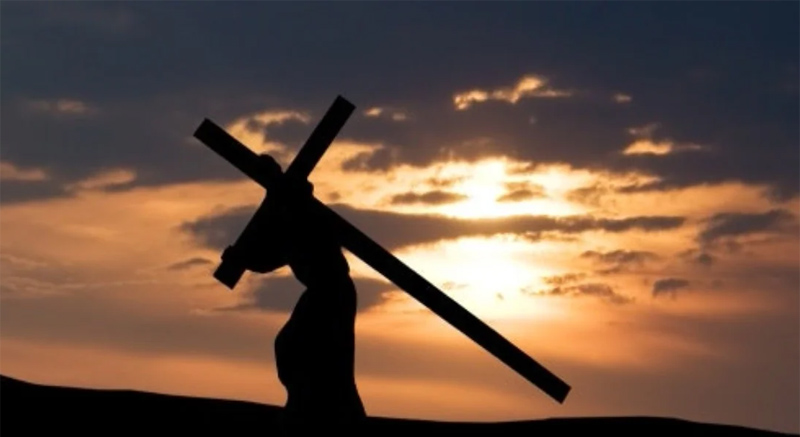
In today’s Gospel account from Matthew, we hear Jesus foreshadowing his own death that took place outside the city walls of Jerusalem. His own Jewish people — the elders, chief priests and the —scribes — would cause him the most suffering leading up to his crucifixion. Jesus challenged the attitudes, policies and positions of the leaders of his day, and they saw him as an affront to their social, religious and political power. Therefore, the solution was to get rid of him.
When Peter rebukes him for talking about his impending death, Jesus rebukes Peter and then teaches the disciples the lesson of their lives. To be a disciple of Christ is to live life as Jesus lived his life: working for justice, which means speaking truth to power. The fullness of the message comes to light during the Passover meal when, after breaking the bread and spilling out the wine, the command is given: “Do this in memory of me.” Embracing the prophetic will make us and others uncomfortable, and for some, even cost one their life.
The prophetic work of justice today entails addressing the oppression done to the natural world, its many communities of life, and injustices within the human community. After all, the Divine dwells in the midst of all, waiting to be encountered.
First Reading
(Jeremiah 20: 7-9)
You duped me, O LORD, and I let myself be duped;
you were too strong for me, and you triumphed.
All the day I am an object of laughter;
everyone mocks me.
Whenever I speak, I must cry out,
violence and outrage is my message;
the word of the LORD has brought me
derision and reproach all the day.
I say to myself, I will not mention him,
I will speak in his name no more.
But then it becomes like fire burning in my heart,
imprisoned in my bones;
I grow weary holding it in, I cannot endure it.
Responsorial Psalm
(Psalm 63)
R. My soul is thirsting for you, O Lord my God.
O God, you are my God whom I seek;
for you my flesh pines and my soul thirsts
like the earth, parched, lifeless and without water.
R. My soul is thirsting for you, O Lord my God.
Thus have I gazed toward you in the sanctuary
to see your power and your glory,
For your kindness is a greater good than life;
my lips shall glorify you.
R. My soul is thirsting for you, O Lord my God.
Thus will I bless you while I live;
lifting up my hands, I will call upon your name.
As with the riches of a banquet shall my soul be satisfied,
and with exultant lips my mouth shall praise you.
R. My soul is thirsting for you, O Lord my God.
You are my help,
and in the shadow of your wings I shout for joy.
My soul clings fast to you;
your right hand upholds me.
R. My soul is thirsting for you, O Lord my God.
Second Reading
(Romans 12: 1-2)
I urge you, brothers and sisters, by the mercies of God,
to offer your bodies as a living sacrifice,
holy and pleasing to God, your spiritual worship.
Do not conform yourselves to this age
but be transformed by the renewal of your mind,
that you may discern what is the will of God,
what is good and pleasing and perfect.
Gospel
(Matthew 16: 21-27)
Jesus began to show his disciples
that he must go to Jerusalem and suffer greatly
from the elders, the chief priests, and the scribes,
and be killed and on the third day be raised.
Then Peter took Jesus aside and began to rebuke him,
“God forbid, Lord! No such thing shall ever happen to you.”
He turned and said to Peter,
“Get behind me, Satan! You are an obstacle to me.
You are thinking not as God does, but as human beings do.”
Then Jesus said to his disciples,
“Whoever wishes to come after me must deny himself,
take up his cross, and follow me.
For whoever wishes to save his life will lose it,
but whoever loses his life for my sake will find it.
What profit would there be for one to gain the whole world
and forfeit his life?
Or what can one give in exchange for his life?
For the Son of Man will come with his angels in his Father’s glory,
and then he will repay all according to his conduct.”