I believe in one God,
the Father almighty,
maker of Heaven and Earth,
of all things visible and invisible.
I believe in one Lord Jesus Christ,
the Only Begotten Son of God,
born of the Father before all ages.
God from God, Light from Light,
true God from true God,
begotten, not made,
consubstantial with the Father;
through him all things were made ….
All good Catholics are familiar with the Nicene Creed. It was written at the First Council of Nicaea in 325 AD.
The leaders of the church wanted to set the record straight because there were those who were promulgating the belief that Jesus was a created being, not fully divine. That belief, promoted by a priest called Arius — hence it is called the Arian Heresy — conflicted with the whole concept of the Holy Trinity by placing Jesus as a subordinate to God the Father. That phrase in the creed, “consubstantial with the Father,” intentionally places Jesus as one with God.
In the year 381AD, the Council of Constantinople took a clarifying step further regarding the Holy Spirit. It is at this time that the words, “I believe in the Holy Spirit, the Lord, the giver of life, who proceeds from the Father and the Son.” The addition cemented forever the beliefs in the Holy Trinity.
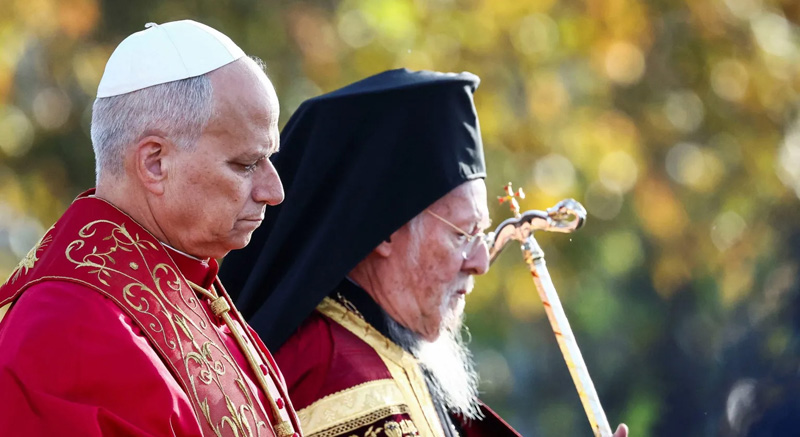
It is particularly significant that on Pope Leo XIV’s November trip to Turkey that he met with other religious leaders of the Roman Catholic and Orthodox faiths in modern-day Iznik, formally Nicaea, the sight of that first ecumenical council 1,700 years ago. Catholic, Orthodox and many Protestant faiths recognize that long-ago written profession of faith. It was Leo’s intention to draw attention to our common beliefs in hopes of affecting a rapprochement between believers.
The occasion was an act of reconciliation and encouragement for Christians to overcome divisions and work toward full communion. The Orthodox and Catholic churches split in the Great Schism (1054) over centuries of theological, political and cultural differences. The final break was triggered by a dispute over the Roman pope’s claim to universal jurisdiction.
Under the Emperor Justinian (r. 527–565), the Church was governed by the heads (or patriarchs) of the five major episcopal sees: Rome, Constantinople, Alexandria, Antioch and Jerusalem. Rome considered itself preeminent, but Constantinople, united with the eastern episcopates, felt equal to Rome. The split continues to this day. Pope Leo stressed the commonalities among all concerned. He also exhorted representatives to not use religion as a justification for war, violence, and fanaticism, advocating for dialogue and cooperation instead.
The pope thanked Patriarch Bartholomew I, Ecumenical Patriarch of Constantinople, for his “great wisdom and foresight” in calling for church leaders to celebrate this important anniversary together. He also expressed appreciation to the Heads of Churches and Representatives of Christian World Communions for attending the event. Let’s pray that this initiative leads to more unity between the Christian communities around the world.
Sources: www.americamagazine.org, www.usccb.org; www.vaticannews.va