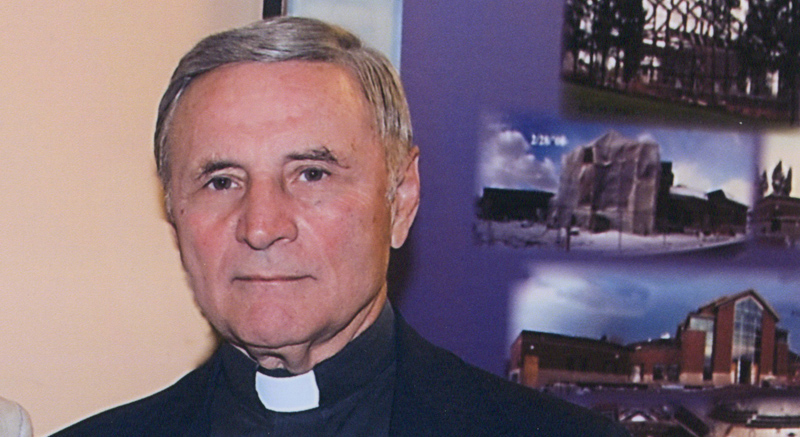
The is Part One of a yearlong series on priests who have special connections to Mount Carmel.
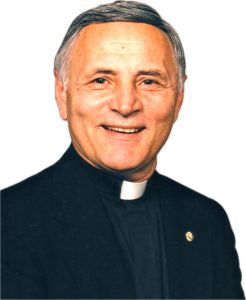
Monsignor Ronald Bill, 95, grew up in Syracuse, graduated from Christian Brothers Academy before attending the seminary. He was ordained in February 1957. His long ministry includes serving parishes across Upstate New York. He also was as a military chaplain during the Vietnam War, retiring as Army brigadier general. He directed Catholic Charities in the Syracuse diocese, assisting refugees and impoverished communities. One of his most inspirational times for him was when he became interim pastor for nearly year at Mount Carmel in 2002.
What drew you to the priesthood? Was it a gradual calling or was it one of those lightning-bolt moments?
Oh, I think it was gradual. I thought about it when I graduated from high school. I went to CBA (Christian Brothers Academy) in Syracuse, and I was associated with many, many priests and brothers there. So, it gave me the idea. And then I talked to a very spiritual priest and a wonderful man, Father Walsh, He was a pastor Lady of Pompei in Syracuse. And he kind of steered me that way. And so, before you know it, I tried it out. The first year I was not enthused with it. It was an education, But I thought I should stay another year. And I did, and then I never left.
What was your first assignment and what was it like being a new priest?
It was a little different because I was sent to Oswego as the Catholic Charities director, and I was also teaching at the Catholic high school, — three classes a day. In those days, there were big classes, like 40, 50 kids in a class. And they were all sophomores. And there, it was a joy. So, in the morning I was in my role as the person to help people, and in the afternoon of teaching.
 All these years later, how did the priesthood change for you?
It changed quite a bit. When I was first ordained, you heard a lot of confessions. Saturday was almost devoted completely to hearing confessions — 4 to 6, 7 to 9 — and big lines of people. It was quite an experience. And that’s all changed today — less people who are going to confession, maybe even going to church.
In addition to being a priest, you also were in the military for a number of years.
I enrolled in the Army in 1968, I believe it was. I was down in Binghamton. I stayed part-time for over 20 years. It was a great experience. I met such wonderful people in the in the service. Men and women. They were outstanding people. I was enthused by their faith in the way they expressed it the way they went to church on Sundays. So, you’d come in marching in. The weapons were near the wall. We had Sunday services every Sunday my whole life there. And it was just a wonderful, wonderful thing.
Where were you stationed?
Most of the time I was in different places in the United States. I started out in the infantry. I ended up in the artillery as a general. I was sent to Corning and places like that where there was a flood. They sent me to Rochester when there was a problem during the war. After I retired, I was asked to resettle a great number of Vietnamese people who had helped the United States during the war. They asked me to resettle 2,500 people. I did that from my knowledge in Catholic Charities. I had a lot of contacts.
What’s the toughest part about being a priest today?
I think, being this age, I miss a lot of the camaraderie I used to have with the other priests. You know, I’m kind of stuck in one place. Being a priest gives you so much to think about, and there were a lot of things to do when I was younger — going to the hospitals, stuff like that. But you know, right now you don’t get those calls.
What many people remember about you is you love to sing
Oh, I did!
Why do you love music so much?
I don’t know. When I went to the seminary, somebody said to the director, “Why don’t you ask Father Bill?” He was looking for some people, especially tenors. And so, he came to me and asked me if I would sing some songs for him. I said, well, I don’t really know any songs. I was trying to get rid of him. And he said, “Well, you don’t know any songs?” I said, “I do know songs, but I really don’t sing them.” I thought that would be enough, but he said, “OK, just sing anything.” He said sing “do-re-me-fa-so-la-ti-do!” And I was in. The next year. I was the director of the choir.
What led up to you coming to Mount Carmel in 2002?
I was asked by the bishop to go there and fill in for a little while. I still remember walking into church. I had never been there. And it was all dark. And all of a sudden, all the lights in church went on. And these two guys came out and they said, “We thought you were the new pastor.” And I loved being there. It was a wonderful place. They had wonderful music. A lot of funerals. Just a great experience for me.
What was your first impression of the parish?
Oh, I loved it. In fact, they wanted me to stay and be the regular pastor. But the parish had been promised to another priest, and I didn’t feel it was right for me to come in. It was a wonderful, wonderful place. The people were so warm, so great. I still think of that as my real parish. Even today I get some of my inspiration from being there.
How do you hope the people of Mount Carmel remember you?
Oh, I hear from a lot of them. About a couple of weeks ago, I went to a restaurant — Eddie’s in Canastota on the beach, and there were some women there. And all of a sudden, they saw me, and they all, you know, scrambled over and we had a wonderful talk.
Is there anything you’d like to say to our parishioners?
Tell them to keep up the good work that they do. They make the priests feel good and make them look good, too.
Monsignor Ronald Bill
- Age: 95
- Education: St. Bernard’s Seminary in Rochester
- When were you ordained: Feb. 2, 1957
- Residence: Immaculate Conception Parish, Syracuse
- Favorite books: Bible and the “Office,’ the priest’s daily prayer book.
- Favorite movie: “The King’s Speech.”