An article in “Vatican News” written by Andrea Monda speaks about the literary masterpiece “The Lord of the Rings” trilogy by J.R.R. Tolkien and its Christian imagery.
One of the author’s critics claimed the trilogy’s hero, Frodo, really was a traitor and should not be praised. Tolkein responded, “The ‘salvation’ of the world and Frodo’s own ‘salvation’ is achieved by his previous pity and forgiveness of injury.”
It occurred to me that there isn’t a lot of “forgiveness” going around today. Grudges fill our political discourse, our international conflicts and to a certain degree our own interactions with others. To hold the upper hand is to own “the power,” and the world today is obsessed with it. Forgiving is interpreted by many as relinquishing power or sign of weakness.

It may be argued, however, that forgiving is the demonstration of power over the aggressor.
Society encourages us to achieve, to succeed, to win, to come out on top, to be the “best.” In doing so we often dismiss others’ achievements, feelings, personal space, aspirations or property. They become an incumbrance, a bother, an obstacle to our own success. We may even eventually begin to see them as enemies.
We get so wound up with our own trajectory that we ignore even our closest loved ones and confidants and how they have supported us on our journey. In doing so we can inflict great injury, whether physical or emotional, on others. We, in turn, become the aggressors.
Do we really need to do that?
The Bible teaches us that we must forgive those whom we perceive as our offenders or enemies. Ephesians 4:32 instructs believers to be “kind and compassionate to one another, forgiving each other, just as in Christ God forgave you.” In Matthew 6:14-15, we are told that if you do not forgive others, God will not forgive your trespasses. We are even told how much we should forgive in Matthew 18:22 when Jesus says that we should forgive “not seven times, but seven times seventy,” using an extreme number to indicate that forgiveness should be limitless.
Forgiveness can be a release. In Buddhism, forgiveness is viewed as a tool for self-liberation. It doesn’t necessarily absolve someone of guilt but is rather a release of anger, resentment and ill-will to free one’s own mind from suffering. In other words, resentment or hatred cannot be terminated by withholding one’s own contempt. Forgiveness is the only way to end the cycle.
When an individual is consumed by hate or resentment over a perceived, or real, transgression of another, that person is often the only person in that situation to feel stress. Often, the target of hate or resentment is oblivious to the transgression and feels no grief. T
hen, what is the point? Serenity is power, and forgiveness can be its key. Forgiveness lifts the burden on one’s shoulders and is a step toward personal peace.
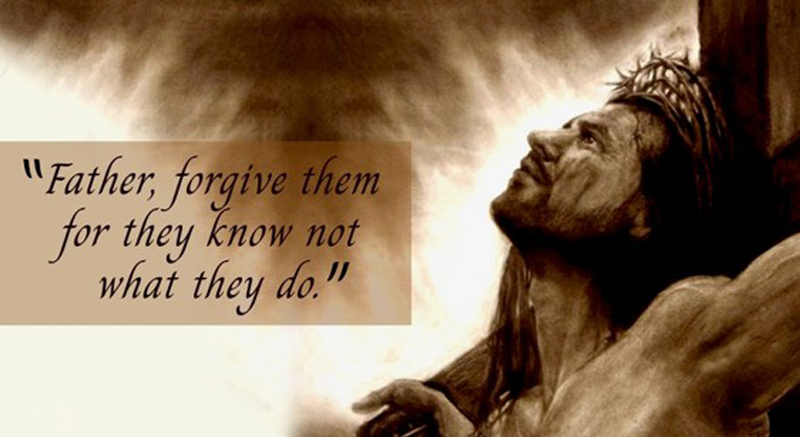
It may not be easy for us to forgive. But if Christ, after being flogged, tortured, nailed to the cross, stabbed in the ribs and asked to drink bile from a sponge, can summon the words, “Father, forgive them for they know not what they do,” we should follow His example.
Shortly after saying those words, the Savior was released from his mortal suffering and joined his Heavenly genitor.
Perhaps, if we mere mortals can forgive, even venial transgressions, we can take a short step toward Paradise as well.